
Category: WELLNESS

  • Diabetes – The Misunderstood Disease

    Diabetes – The Misunderstood Disease

    Type 2 Diabetes is one of the most misunderstood diseases in medicine. It is typically thought of as a disease of high blood sugar. (High sugar is the symptom, not the disease).

    To further confuse the issue, doctors will tell you it’s hereditary. If that were so, how does one explain the 600% increase in Type 2 Diabetes worldwide in the latter half of the last century (much of it within the same generation)? More and more children are developing what was once an adult disease.

    Clearly something more than just genetic predisposition is at work here.

    Limitations of Conventional Treatment

    Conventional treatment focuses on lowering blood sugar levels with the use of oral medication and/or insulin. Even while sugar levels are controlled in this manner, the disease marches on, leading to conditions such as neuropathy, retinopathy and nephropathy.

    If controlling sugar levels was all that was needed, why do diabetics develop these problems?

    Trading One Evil for Another

    Conventional treatment lowers blood sugar levels while raising insulin levels. This approach solves one problem while creating a host of other problems. Current research clearly shows that high insulin levels play a major role in:

    Heart disease

    Peripheral Vascular Disease

    Stroke

    High Blood Pressure

    Obesity

    Diabetics are at risk for all of the above.

    Clearly, something more than just blood sugar control is needed to tame this monster.

    In order to do so, we must first understand the disease and its mechanism.

    Looking at the Causes instead of the Symptoms

    One of the prime causes of Type 2 Diabetes is a decrease in energy production at the cellular level. Two conditions cause this decrease in energy production:

    1. The inability of the body to efficiently metabolize oxygen to produce energy.

    (There are 2 ways your body can make energy. By metabolizing the oxygen you breathe (aerobic metabolism) and through anaerobic metabolism i.e. without oxygen. The former lasts a lot longer and is preferable while the latter is reserved for emergencies. Inefficient aerobic metabolism results in an energy deficit leading to degenerative diseases such as diabetes).

    2. Shifting away from burning FAT to burning GLUCOSE for energy.

    (Oxygen can be used to burn fat or glucose for energy. Contrary to popular belief, it is fat and not glucose that the body prefers to burn to produce energy. A typical young person will obtain almost 100% of their resting energy production from burning fat, while an older (or sicker) person will burn glucose for their energy production. As people age or develop disease, they shift from burning fat to burning glucose).

    How Decreased Aerobic Metabolism Results in Type 2 Diabetes

    Cells store energy in the form of ATP which provides the energy for cell membranes to communicate with insulin, without which glucose cannot enter the cell. As energy production decreases, and the cell has less ATP, it cannot interact effectively with insulin. This is ONE OF THE PRIME CAUSES of insulin resistance (resulting in Type 2 Diabetes).

    A deficit in ATP contributes in several other ways to developing Type 2 Diabetes.

    Eg: ATP protects islet cells in the pancreas from free radical damage.

    How the Shift from Fat to Glucose Metabolism Results in Type 2 Diabetes

    The shift from fat to glucose metabolism causes the cells to burn more glucose and since very little glucose can be stored, it results in continuous depletion of glucose stores. This makes one crave for carbohydrates. The more carbohydrates you eat, the more insulin your body will make. The cells respond to this increase in insulin production by decreasing the number of insulin receptors (called receptor down regulation). This again leads to insulin resistance.

    The body adapts to the dietary shift of increased carbohydrate intake by burning more glucose instead of fat.

    And because most of these carbohydrate calories are not going to be used up immediately, they will be stored as fat. Burning less and storing more fat increases your body fat percentage…another cause of insulin resistance.

    As insulin levels rise, the adrenal glands pump out more cortisol (a stress hormone) to balance the effects of insulin. Elevated cortisol suppresses the activity of insulin receptors on cells and insulin resistance becomes eve more pronounced.

    The Good news

    Type 2 Diabetes can be dealt with effectively without having to suffer its debilitating effects.

    The best approach would be to consult a healthcare practitioner and implement some or all of the concepts outlined here.

    Your doctor should start by evaluating your energy production by measuring the oxygen and carbon dioxide content you inhale and exhale while at rest, and while you exercise. Hormone levels need to be assessed as well.

    The treatment should focus on improving energy production through various natural means available and also help the body return to burning fat as the primary energy source.

    However, diabetics can start by implementing the following simple tips on their own. These tips will also help those who wish to take preventive action.

    (Note: the following tips are just to get you started while you try and find a doctor who can help you to treat the root cause of the disease rather than suppress the symptoms as described above).

    Simple Steps to Success

    • Eat good quality proteins such as pulses and fish. Consume good fats such as cold-pressed olive oil, raw nuts (almonds and walnuts, etc.). Eat complex carbohydrates such as cabbage, broccoli, etc. Avoid refined carbohydrates such as white flour, white rice, white sugar, etc.
    • Reduce your calorie intake by about 10-15%.
    • Exercise in a way that progressively challenges your cardio-vascular system. Stair climbing is a good example. (Always consult your doctor before trying any exercise).
    • Clean out your liver! A good naturopathic centre can do this for you.
    • Get adequate sleep. Sleep deficit results in decreased energy production and decreased fat metabolism.
    • Reduce stress. When under stress, the adrenal glands produce high levels of cortisol which leads to increased insulin production. This contributes towards insulin resistance.
    • Talk to your doctor about correcting hormonal imbalances with natural supplements.
  • Enzymes: The Fountain of Youth? Part 2 – How to stop the degeneration of the body?

    Enzymes: The Fountain of Youth? Part 2 – How to stop the degeneration of the body?

    1. Replace Enzymes that have been lost through years of eating ‘dead’ food, by eating germinating, sprouted and raw foods in sufficient quantities. Don’t forget to include papayas (which are rich in the enzyme “papain”) and pineapples (rich in the enzyme “bromelain”). Juicing (fruits, vegetables and cereal grasses) is an excellent way to consume nutritionally dense foods.

    For healthy digestion, optimal absorption and efficient elimination, here are some guidelines for proper food combining:

    • Fruit:

    Do not combine with other foods. Eat only on an empty stomach and wait 30 minutes before eating other foods.

    • Fats:

    (Nuts, seeds and their sprouts; avocado and coconut): Avoid mixing these foods. Combine only with non-starchy vegetables. The one exception is avocado, which can be combined with any vegetable.

    • Starches:

    (Potato, squash, corn, carrots, grains): It is okay to mix these foods. You can combine them with any type of vegetable, except tomatoes.

    • Bean Sprouts and Grain Sprouts:

    Avoid mixing these foods. It is okay to combine these with any type of vegetable, except tomatoes.

    Supplements containing combinations of amylase, lipase and protease (along with other enzymes) can also be helpful. These come in the form of digestive, pancreatic or proteolytic enzymes. Another class of enzyme supplements called Super Oxide Dismutase and Catalase, can reduce oxidative stress (cellular damage), in the body.

    2. Oxygenate the body through healthy breathing practices (such as pranayama). All disease states are either caused by or complicated by a lack of oxygen. Oxygen feeds tissue, kills viruses, singes bacteria, destroys yeast and dissolves cancer. All bugs hate oxygen. Cancer cells feed on glycogen (anaerobic respiration) and die in the strong presence of oxygen. Part of a healthy immune system is to have good circulation, rich red blood cells and clean thin blood needed to carry oxygen throughout the body to kill anything that may be festering due to the lack of sufficient oxygen. Good breathing habits can accomplish all of this.

    3. Strength Training builds lean muscle, mineralizes bones and restores hormonal balance. To achieve all this, aerobics, cardio, walking or other such exercises will not do. A physiological law states: “Mineralization is laid into bone along axial lines of stress”. What that means is that unless we compress hard and tug hard on a bone, it will not absorb minerals well or maintain its mineral mass. Some doctors think this law can be fulfilled by simple weight bearing exercise such as walking, but research has proved them wrong. For one thing, while walking, the arms, shoulders and mid-back bear no weight. How can they benefit from walking? For another, the first principle of exercise is that a muscle prefers to get its exercise in its primary range of motion. It also prefers as great a range of motion as it can safely handle. This will stress the bones sufficiently to produce the adaptive response needed for mineralizing. Walking has a mere 13 degrees range of motion at the hip and knee. The hip is capable of a range of 160 degrees and the knee, 135 degrees. So how much exercise can 13 degrees give? Not much. For walking to be a good exercise in bone building for the pelvis and lower extremity, you would have to go very fast both uphill and downhill. That’s not likely to happen.

    The energy we use for everything in our lives is produced by mitochondria. It is these furnaces of the cells where Adenosine Tri Phosphate is produced (ATP). ATP is the fuel that powers everything in our bodies. Most of the ATP in the body is made in the muscles.

    The brain uses 33% of the body’s daily energy, the eyes 33% and the remainder is used by the rest of the body. If we have fewer mitochondria, as in diseases such as Mononucleosis, Fibromyalgia, Chronic Fatigue Syndrome or due to age and loss of muscle, then all of our energy is significantly reduced and we are in a fog. The only thing that can significantly increase the number of mitochondria in our bodies is STRENGTH TRAINING (through lifting weights and/or doing body weight exercises).

    Putting it all together:

    Eating ‘dead’ foods leads to enzyme deficiency which in turn leads to physical degeneration, starting as early as age 27.

    • If we don’t replace the enzymes that we have lost, our body cannot perform basic functions such as fighting inflammation and disease, repairing damaged tissue or circulating blood (oxygen).
    • If we don’t maintain high levels of circulating oxygen, bugs will grow and fester throughout our bodies and we will have low energy and a shortened life span.
    • If we don’t raise our declining levels of sex hormones such as progesterone and testosterone, we cannot stop or reverse bone and muscle loss; we’ll also become depressed, gain fat and have no zest for life.

    All these issues can be taken care of just by eating (and drinking) live and raw foods, breathing correctly and strength training. In the process, we will undo the effects of premature aging and dramatically hold back the years.

  • Eat Right To Support Your Yoga

    Eat Right To Support Your Yoga

    The practice of yoga is highly personal. Different people have different expectations from their yoga practice. However, one of the main reasons people practice yoga is because they hope to discover some balance in their lives.

    Eating, like yoga, is individualistic and seeks balance. But in developing a supportive nutritional approach, bear in mind: “One size does not fit all” when it comes to finding the right foods for your unique constitution.

    There are a lot of myths and urban legends telling you which foods are “good” or “bad” for yoga practitioners.

    Some common myths:

    • Feeling stiff? Eat more ghee or more sweet-tasting foods
    • Eat only fruit before your yoga session and avoid potatoes
    • Above all, avoid dinner the night before an intense yoga session

    History of Food Myths:

    Many of these myths and theories are distortions of yogic scriptures and Ayurvedic theories. Let us examine the original context to understand how these myths came to exist in the first place.

    Both yoga and Ayurveda in a way are inseparable. A core principle in Ayurveda is the concept of varying body types, each of which thrives on different kinds of foods.

    • Vata types need grounding foods like oils and grains.
    • Pitta types thrive on cooling foods such as salads and sweet fruits.
    • Kapha types benefit from heating and invigorating foods, such as hot chillies.

    Few people are strictly one type. Most are a blend of at least two types. Each individual must therefore find a personal balance of foods to fit his or her own unique constitution.

    Just as certain yoga poses are appropriate for certain people or at particular times, so also with what you eat. Food should provide energy and clarity. A “good” diet is different for different people, but you will know your diet is working well when you feel healthy, sleep well, have efficient digestion and feel your system is supported rather than depleted by your yoga practice.

    Please be aware that references to food in the scriptures and Ayurveda are meant only as guidelines and not rules set in stone. We were meant to follow these guidelines until we as practitioners, become skilled enough to find the right dietary balance for ourselves.

    Making general statements about what we should or should not eat, such as ‘potatoes make you stiff’ is absurd. It’s all a matter of personal constitution. Potatoes tend to be pacifying to pitta and aggravating for vata and kapha types. However they are not recommended for people with inflammatory or arthritic conditions.

    Another area of confusion is whether drinking cold water is good or bad for us. Cold water can affect certain constitutions. Vata types can have a hard time tolerating it, and it can also amplify sluggish digestion problems in kapha types. But pitta types might find that it actually soothes their digestive systems.

    Myths and Facts about Fasting:

    Many yoga practitioners experiment with fasting for several hours before a session. However, research shows that frequent and extended fasting has an overall weakening effect on the body. Though overeating can make you groggy and too full to go deeply into the postures, fasting and under-eating can have a more debilitating effect.

    One of the dangers of extended fasting is that when practitioners get light-headed due to low blood sugar and dehydration, they might mistake that feeling for a spiritual high…that ‘oneness with God’!

    For vata or pitta types, skipping a meal can cause not only low blood sugar and dizziness, but may lead to further health complications such as constipation, poor digestion and insomnia.

    So how do you develop your own balanced approach to eating?

    When approaching either yoga or food, experimentation and alert attention are the keys to discovering your personal path to balance and growth. As you continue to practice yoga, an intuitive sense of what is right for your own body will emerge. Notice patterns in your digestion, sleep cycle, breathing, energy level and asana practice after eating. A food diary can be an excellent tool for keeping track of these patterns. If you’re feeling unhealthy or unbalanced at any time, check your diary to see what you’ve been eating that might be causing the problem(s). Adjust your eating habits accordingly until you start to feel better.

    Food Types

    Rajasic Foods can lead to restlessness and lack of focus. These are usually highly seasoned dishes that are fried, baked, roasted or curried. The Rajasik food group also includes most desserts and alcoholic beverages.

    Tamasic Foods may lead to a lethargic disposition. Dishes in this category are usually over-spiced with salt, pepper and other hot spices. In most cases, they also contain additives and artificial ingredients or colors. Some of the more common foods in this group are onions, garlic, vinegar and of course tobacco.

    Sattvic Foods are the most recommended for those practicing yoga because they lead to greater clarity and calmness. Sattvic foods are more easily digested and are not fat laden or protein-dense as in animal products; therefore, the Sattvic diet is primarily lacto-vegetarian.

    Sattvic Foods to include in your diet:

    • Fresh vegetables, especially green, leafy vegetables
    • Fresh fruits
    • Legumes (the smaller the bean, the easier to digest)
    • Raw Nuts and Seeds
    • Herbal teas
    • Raw Honey
    • Dairy products such as cheese, ghee, butter, yogurt and cream
    • Dried peas and lentils
    • Fresh vegetable juices
    • Sprouts
    • Unrefined Oils – Olive, Flax, Coconut, Sesame, Sunflower, Safflower
    • Mild spices, including ginger and turmeric
    • Lightly steamed foods
    • Raw foods
    • Lightly cooked foods
    • Alkaline foods
    • Proper food combination (Certain foods do not digest well when eaten with other foods)

    Rajasic and Tamasic foods to be avoided:

    • Sugar-laden foods
    • Foods with preservatives and chemicals
    • Spicy foods
    • Red hot chilies
    • Black pepper
    • Garlic
    • Onion
    • Mushrooms
    • Potatoes
    • Coffee and non-Herbal Tea
    • Fish and meat
    • Chocolate
    • Frozen foods
    • Canned foods
    • Microwaved foods
    • Overcooked foods
    • Acidic foods
    • Refined foods (such as white flour, white rice, sugar, etc.)
    • Improperly combined foods

    List of Sattvic Foods

    Ladies finger, bitter gourd, horse gram, coconut, capsicum, corn, potato, lentils, double beans, pumpkin, sweet potato, toor dal, coriander leaves, fenugreek, grapes, apples, pomegranates, sapotas, sweet lime, orange, guava, dates, papaya, pineapple, watermelon, banana etc.

    The more we embrace these Sattvic principles, the more helpful they will be in enhancing our practice of yoga, both physically as well as spiritually.

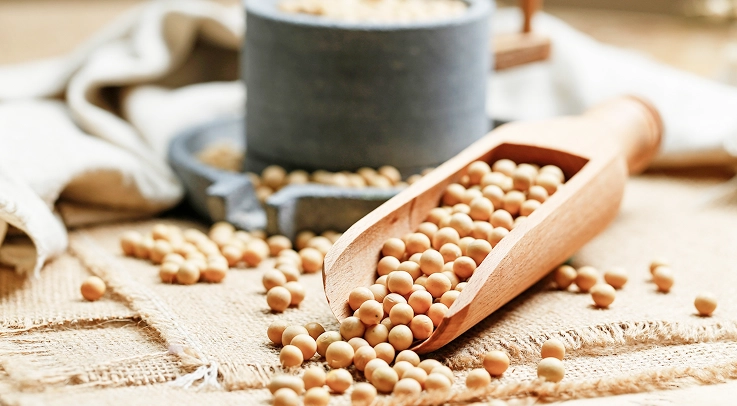
  • Soyabean: Nutritional Star or Clever Con?

    Soyabean: Nutritional Star or Clever Con?

    Speak to most health-conscious individuals these days and they will tell you that soy is one of the healthiest natural foods on the planet. Authoritative articles try to convince you that soy is the perfect protein, a great-tasting meat substitute and an excellent alternative to milk.

    But before you buy into this “picture-perfect” Cinderella story of nutrition, it may be prudent to look at some of soy’s dark secrets that lurk behind that healthy façade.

    Soy is not a natural food

    Unlike other beans, the soybean, in its natural form contains heat-labile, anti-nutritional factors. That is why it requires extensive processing to make it safe for eating. Soybeans were traditionally grown between consecutive harvests of the main crop to improve the nitrogen content in agricultural soil. After doing their job, the beans were fed to cattle or used as compost for the next cash crop. Later it was discovered that if soybeans were fermented, they could be digested by humans! And thus was born tempeh, miso, soy sauce etc. (fermented soybean products).

    Soy is the most highly processed of all commercial foods

    “So what is wrong with processing?” you may ask. Let’s see.

    The beans are exposed to high-temperature cooking. This denatures the natural enzymes in the soybeans. Enzymes, vitamins and minerals are the three pillars of metabolism. Take away any one pillar and the other two cannot function properly. Without the enzymes, soybeans become very difficult to digest.

    After high-temperature cooking (the first stage in processing), oil is extracted using chemical solvents, de-gumming, sodium hydroxide (a chemical used in drain cleaners), bleaching and deodorizing (using extreme heat). The “residue” that is left behind after this highly toxic chemical process, is what is sold as soy burgers and other forms of soy protein.

    Soy is not a complete protein

    Out of all the amino acids that come from proteins, the body needs eight from external sources, since it can’t synthesize them on its own. These eight are known as essential amino acids. Soy protein lacks two of these essential amino acids – cysteine and methionine. A deficiency in these can lead to an abundance of health problems.

    Soy contains many toxins and anti-nutrients

    • Our digestive system relies on an orchestra of enzymes to perform the complex functions required in breaking down and absorbing the food we eat. Soybeans contain toxins that inhibit these digestive enzymes (primarily the pancreatic enzyme trypsin), thereby throwing the entire digestive process into a state of confusion.
    • Soybeans contain the highest levels of phytic acid of any bean. These high levels block the uptake of important minerals such as iron, magnesium, calcium and especially zinc. Through this blocking mechanism, soybeans can cause mineral deficiencies. It is no wonder that third world countries that have diets high in soy and other refined grains have the most profound mineral deficiencies. Zinc deficiency is particularly bad for infants on soy formula because it is essential for immune system development, protein digestion, growth, brain and nervous functions.
    • Hemagglutinin is another danger hidden in soy. It can cause abnormal clotting of red blood cells, thus putting those with heart disease at greater risk.
    • Soy infant formula contains aluminium levels tens times higher than in milk-based formula. Aluminium (linked to Alzheimer’s disease), can also damage an infant’s kidneys. But the greatest danger can be to the baby’s brain because the blood-brain barrier hasn’t been formed yet.
    • Soybeans go through a process called alkaline soaking. This process leaves behind a by-product called lysinoalanine which is a known carcinogen (cancer-causing agent).

    Soybeans are often genetically modified

    Genetic engineering may seem to be scientifically sound. In reality, it is not. Bioengineers who insert genes into plant DNA have no idea how those genes will behave (genetic expression). We are being used as guinea pigs in these potentially dangerous experiments.

    The drawbacks of soy as a natural estrogen

    Experts claim that soy products contain natural estrogen which can help menopausal women prevent hormone-related ailments. What they are referring to is a substance called “isoflavones.” Firstly, since most isoflavones come from genetically modified soy, they are definitely not natural. Secondly, the increase in estrogen levels by soy isoflavones may be pathological and have never been studied. For instance, infants taking soy have sometimes shown phytoestrogen levels that are 13,000 times higher than normal blood estrogen levels! High levels of some estrogens can promote tumors, menstrual disruption and sex organ malfunction.

    Bottom line

    Soy is not a health food. From blocking mineral absorption to depressing thyroid function, soy protein can cause a host of health problems. This is not food. It is technology. Choose from a wide variety of natural proteins that are far superior in every way…and say no to soy.

    Soy is everywhere – watch out!

    You’ll find refined soybean oil in cakes, packaged soups, potato chips, etc. Soy flour or soy meal will show up as “natural flavouring,” “hydrolyzed protein,” “textured vegetable protein,” etc. Read food labels carefully!

    One Silver Lining

    Some components of soy such as “daidzein” and “genistein” do exhibit anti-cancer properties and are used therapeutically on cancer patients in naturopathic medicine. The medicinal use of soy is based on “fractions” (isolated parts of the bean) and in no way contradicts the dietary dangers it poses.

    #Soyabean #soyaproducts #soy

  • How to Achieve Peak Performance – Workplace Wellness Workshop

    How to Achieve Peak Performance – Workplace Wellness Workshop

    Are you an “over-motivated, underachiever” – a person who is talented and able, but doesn’t perform anywhere near their true potential, despite massive amounts of effort? In our culture “hard work” is considered to be a virtue and this misconception creates the over-motivated underachiever. Unfortunately, the results of their work rarely equal the effort they’ve put in, and this “hard work” mentality will only break them down and frustrate them in the long run.

    So, are you an over-motivated underachiever? You probably are if…

    • You are delaying your own dreams in order to satisfy others
    • You work all the time but never enjoy it or get satisfaction
    • You think that effort will overcome any obstacle
    • You work 24/7 to boost your career, but all that work has only made you a candidate for a heart attack
    • You constantly complain that it’s not fair when someone who’s never in the office before 9am is given a promotion
    • You always perform better when you are not under pressure
    • You “know” you can do better but you can’t seem to do it
    • You spend so much time at the office or on tour that when you come home your child asks your wife, “Who’s he?”

    It’s very easy to look at a superstar in your field and conclude that he is successful because of his natural-born talents.

    Few people realize that ordinary people accomplish extraordinary things all the time, in every field, just by learning how to exploit the potential of the human mind.

    Every person is wired to succeed to the best of our ability; humans are designed not just to cope with pressure but to thrive on it, using it as a psychological energy bar that fuels our daily performances to greater heights.

    How to achieve Peak Performance

    The Peak Performance Program is designed to show people how to do this.

    Participants will get tools to help them learn and practice how to access The Peak Performance Mindset.

    Some of the learning will be:

    • How to consistently achieve the kind of intense focus that all the best performers in every field are capable of achieving
    • How to reshape your thinking so you will be able to trust your skills to perform freely and intensely even under intense pressure

    But most importantly, people will learn the differences between the Average Mindset and the Peak Performer’s Mindset and how to make the switch.

    Here are the key differences between the “Average Mindset” and the “Peak Performer’s Mindset”:

    THE AVERAGE MINDSETTHE PEAK PERFORMER’S
    MINDSET
    Active Mind Empty Mind
    JudgmentalAccepting
    AnalyticalInstinctive
    ScientificArtistic
    Wanting It NowPatient
    CalculatingReacting
    EffortfulPlayful
    CriticalQuiet
    IntentionalRhythmic
    Controlling Letting It Happen

    It may be hard to believe, but…

    AN EMPTY MIND IS A SUCCESSFUL MIND

    #peakperformance #workplacewellness #improveperformance #overmotivated #underachiever #averagemindset #peakperformersmindset